
A Storm-Proof Guide: Why Retaining Wall Drainage Fails
Brisbane’s weather is becoming increasingly unpredictable, with flash storms and heavy rainfall events occurring more frequently across the region. For many property owners, this raises serious concerns about the durability of retaining walls in Brisbane, QLD. While materials and construction methods often receive the most attention, the real reason many retaining walls fail is poor drainage. Water trapped behind a wall can create immense pressure that eventually leads to structural damage.
Understanding how drainage works and why it fails is essential for homeowners, developers, landscapers, and property managers who want their retaining walls to withstand Queensland’s challenging climate.
Brisbane’s Changing Climate and the Impact on Retaining Walls
Recent weather patterns across Queensland indicate an increase in short but intense rainfall events. These flash storms deliver large volumes of water in a short period, quickly saturating soil and overwhelming poorly designed drainage systems. In areas with sloping land or elevated landscaping, this can place significant strain on retaining walls in Brisbane, QLD. When water cannot escape from the soil behind the wall, pressure builds up and gradually weakens the structure.
Property owners often assume wall failures occur because of weak materials or poor construction. However, drainage problems are frequently the hidden cause behind many damaged or collapsed walls. Proper drainage planning is now more important than ever when designing or maintaining retaining walls.
The Invisible Failure Happening Behind the Wall
One of the biggest challenges with retaining wall damage is that the problem often develops underground long before visible cracks appear. When rainwater soaks into the soil behind the wall, the soil becomes heavier and more compact. If the water has no drainage path, it becomes trapped and creates hydrostatic pressure. Over time, this pressure pushes against the wall structure.
For many retaining walls in Brisbane, QLD, this hidden pressure builds gradually until the wall begins to show signs of stress, such as leaning, cracking, or bulging. Because this process happens below ground level, property owners may not notice the issue until the wall has already sustained serious damage.
Preventing this invisible failure requires proper drainage design and regular inspections.
Why is my retaining wall leaning after heavy rain in Brisbane?
Leaning or bulging walls are typically caused by hydrostatic pressure. Water trapped behind the wall can weigh up to 50 per cent more than dry soil. In Brisbane’s subtropical climate, proper drainage systems, including AG pipes, gravel backfill, and clear weep holes, are essential to prevent structural collapse during storm season. This issue is common with poorly designed retaining walls in Brisbane, QLD, especially when drainage components are missing, blocked, or incorrectly installed.
Without these systems in place, rainwater becomes trapped behind the wall and places enormous pressure on the structure. For property owners, a leaning retaining wall is often the first visible sign that drainage failure has already begun.
Common Causes of Retaining Wall Drainage Failure
There are several reasons why drainage systems behind retaining walls stop working effectively. One common issue is the absence of proper drainage pipes. AG pipes are designed to collect excess water and direct it away from the wall. Without these pipes, water remains trapped within the soil. Another problem occurs when drainage gravel is not installed correctly. Gravel allows water to flow freely behind the wall, reducing pressure build-up. If compacted soil is used instead, water cannot escape easily.
Blocked weep holes are another frequent cause of drainage failure. These small openings allow water to exit the wall, but they can become clogged with debris, sediment, or plant roots over time. For many older retaining walls in Brisbane, QLD, these drainage systems may be outdated or poorly maintained, making them vulnerable during heavy storms.
Why Concrete Sleeper Walls Perform Better in Wet Conditions
Material choice also plays a major role in the durability of retaining walls, particularly in Brisbane’s humid and termite-prone environment. Traditional timber retaining walls have been widely used for decades, but they are more vulnerable to rot, termites, and moisture damage.
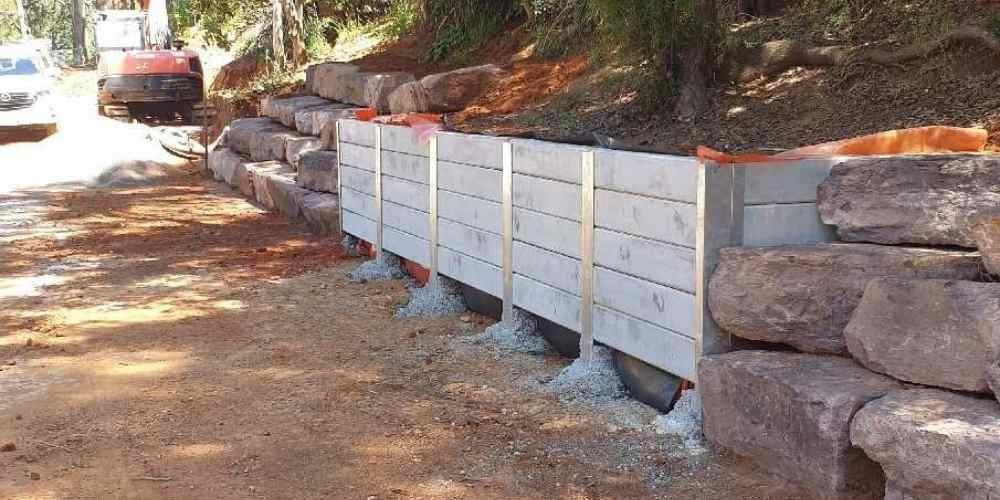
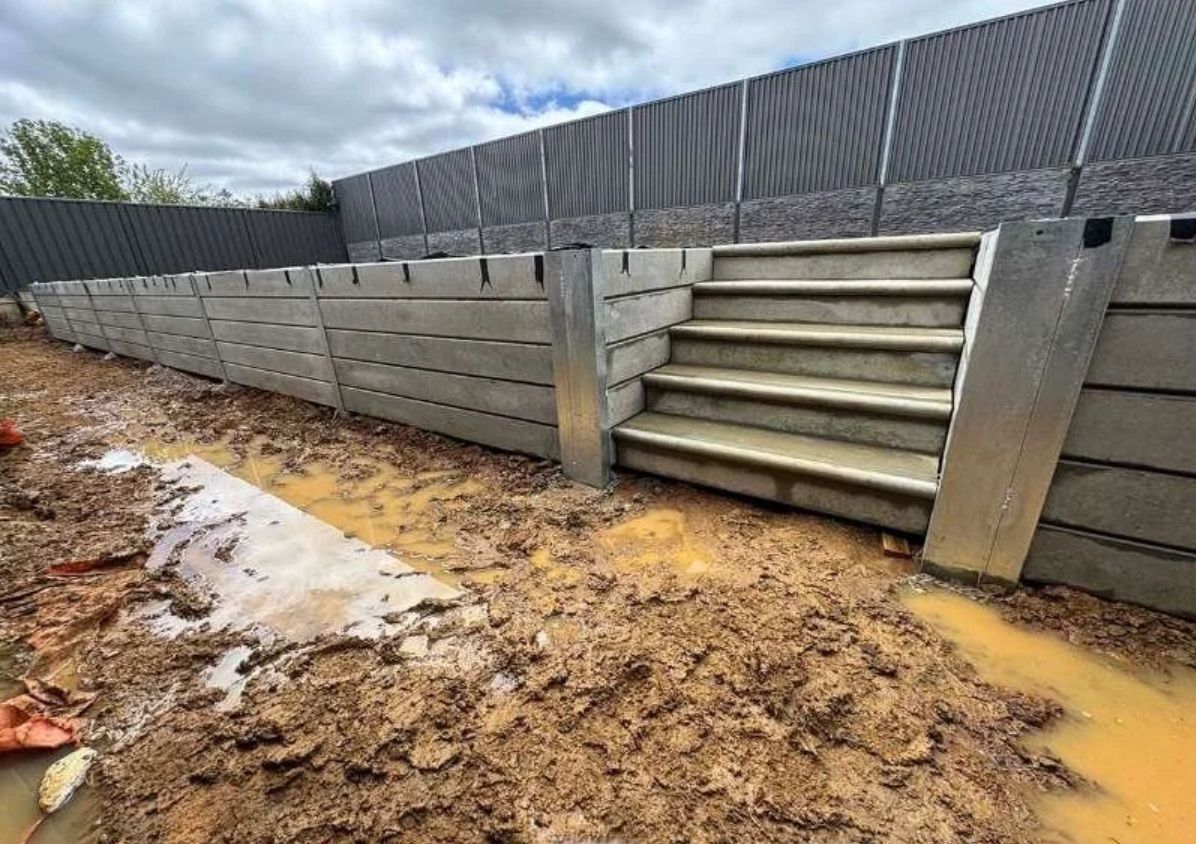
Concrete sleeper walls offer a far more durable solution. These walls are designed to withstand heavy loads, resist moisture damage, and maintain structural strength even during prolonged wet conditions. For many modern retaining walls in Brisbane, QLD, concrete sleepers have become the preferred option because they provide long-term reliability and improved resistance to storm-related stress.
When combined with proper drainage systems, concrete sleeper walls can perform exceptionally well during Queensland’s intense rainfall events.
Signs Your Retaining Wall May Be Failing
Early detection is key to preventing major structural damage. Property owners should look out for several warning signs that may indicate drainage problems behind the wall. One of the most common signs is a visible lean or bulge in the wall. This often indicates that pressure is building behind the structure.
Cracks in the wall surface or shifting soil nearby can also signal that the wall is under stress. Pooling water around the base of the wall may suggest that drainage systems are not functioning correctly. These issues are often reported with older retaining walls in Brisbane, QLD, particularly after periods of heavy rainfall. Regular inspections can help identify these problems early and prevent costly repairs.
Designing Retaining Walls to Withstand Brisbane Storms
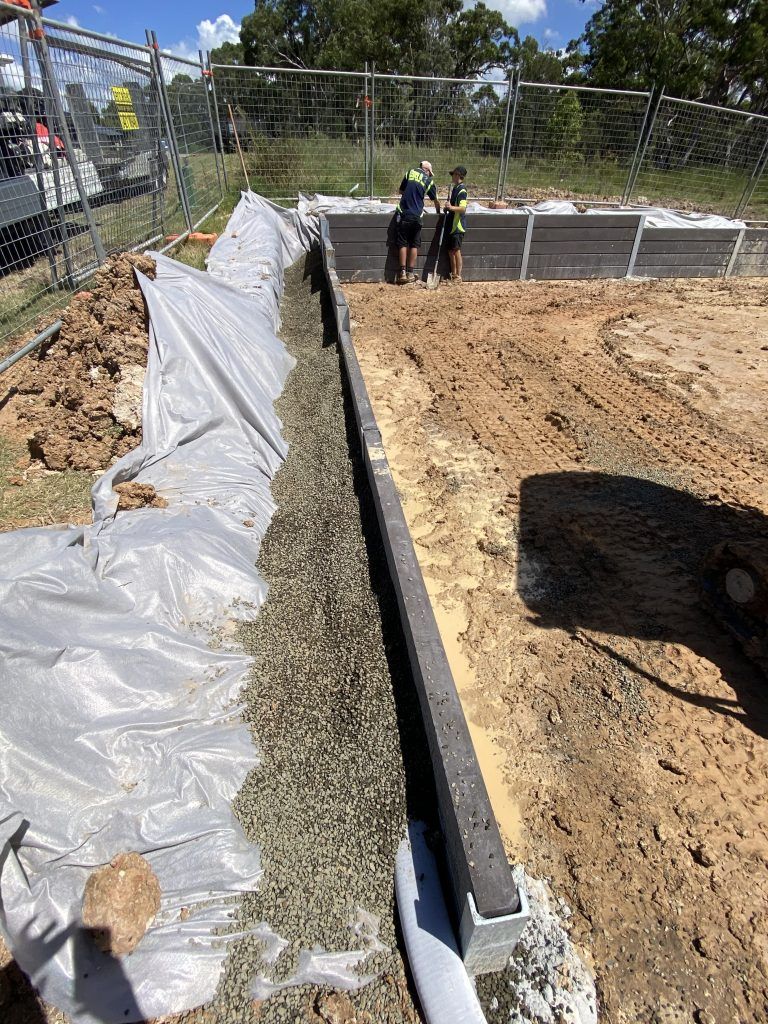
Storm-resistant retaining walls require more than just strong materials. They must be designed with proper water management systems that allow rainwater to drain away safely. Effective drainage design usually includes several important elements. Perforated drainage pipes collect excess water behind the wall and move it away from the structure. Free-draining gravel placed behind the wall helps water move easily towards the drainage pipes.
Weep holes provide additional exit points for water, ensuring that pressure does not build up. When properly designed, these systems help protect retaining walls in Brisbane, QLD, from the extreme pressures caused by heavy rainfall. Stormproof wall construction focuses on preventing water buildup rather than simply resisting it.
Maintaining Retaining Wall Drainage Systems
Even well-designed drainage systems require maintenance to remain effective. Over time, debris, soil movement, and plant roots can block drainage pipes or weep holes. Regular inspections ensure that water can continue to flow freely. Clearing blocked drainage points and monitoring soil conditions can extend the lifespan of retaining walls in Brisbane, QLD.
Property owners who stay proactive with maintenance are far less likely to experience sudden wall failure during storm season. Preventative care helps maintain both safety and property value.
Protect Your Property With Expert Retaining Wall Solutions
If your property includes retaining walls in Brisbane, QLD, proper drainage design and maintenance are essential to withstand Queensland’s increasingly intense storm conditions. The team at Apollo Landscaping Supplies understands the unique challenges local landscapes face and provides high-quality materials designed for durability and performance.
Contact Apollo Landscaping Supplies today on (07) 3275 1195 for expert advice and materials for retaining walls in Brisbane, QLD. Build a wall designed to survive Brisbane’s storm seasons and protect your property for years to come.